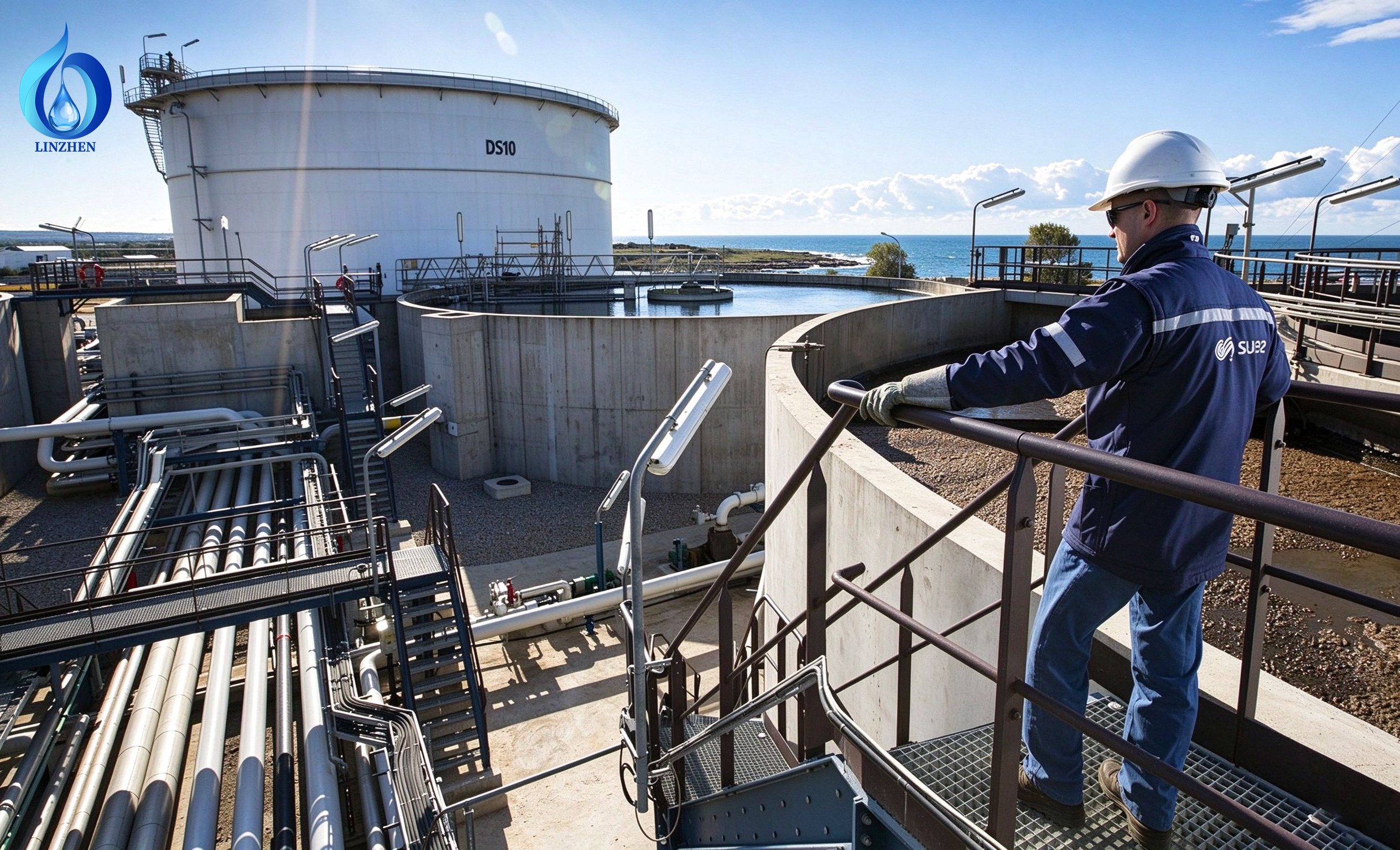
Wastewater treatment plant design is one of the most critical stages in the development of any municipal, residential, commercial, or industrial wastewater project. A wastewater treatment plant may be equipped with high-quality equipment and modern treatment technologies, but achieving the intended treatment performance requires the original design to be based on accurate flow data, appropriate process selection, and complete hydraulic calculations, with all components properly coordinated.
For project owners, developers, contractors, and public authorities, design deficiencies can lead to significant problems. These may include excessive construction costs, high energy consumption, unstable operation, treated water that fails to meet required standards, difficult maintenance, repeated modifications, and delays during commissioning. Therefore, a successful wastewater treatment plant must be designed as an integrated engineering system. In addition, extensive project experience is an important factor when evaluating wastewater treatment engineering capabilities.
The design should also ensure that the wastewater treatment plant remains practical during operation, provides sufficient flexibility for future expansion, and operates reliably throughout its expected service life.
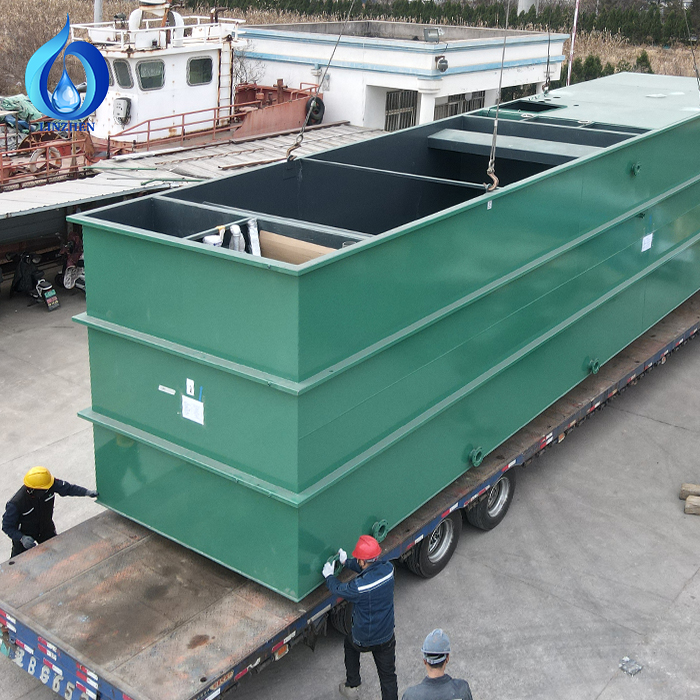
This wastewater treatment engineering project was developed for a customer in Saudi Arabia. Our scope of work included wastewater treatment plant design, on-site engineering layout, construction drawings, and facility support. The project scope covers municipal and industrial wastewater treatment facilities, pumping stations, and other water-related infrastructure.
Why Wastewater Treatment Plant Design Is Critical to Project Success?
The visible components of a wastewater treatment plant include tanks, pipelines, pumps, treatment equipment, and equipment rooms. However, the most important decisions are made before construction begins.
The design-stage framework includes:
- Wastewater treatment process
- Required treatment capacity and hydraulic load
- Available land area
- Number, size, and configuration of treatment units
- Flow distribution
- Sizing of pumps, blowers, and mechanical equipment
- Electrical load and power requirements
- Automation and control requirements
- Sludge production and sludge treatment requirements
- Peak flow and load handling capacity
- Final effluent quality
- Reserved space for future capacity expansion
For large-scale wastewater treatment projects, these factors are particularly important. An inappropriate wastewater treatment process can increase construction costs while also making daily operation and maintenance more difficult.
Equipment selection, including pumps, blowers, mixers, dosing systems, and other mechanical equipment, must be properly selected and sized according to the actual flow rate, operating conditions, and process requirements. At the same time, civil engineering works and wastewater treatment equipment must be properly coordinated during the design stage.
Treatment tanks, equipment foundations, pipelines, electrical systems, inlet and outlet areas, and maintenance spaces must work together within the overall wastewater treatment plant layout. Poor coordination between civil works and mechanical and electrical systems may result in costly modifications after construction has begun.
Therefore, professional wastewater treatment plant engineering should treat the facility as an integrated system rather than as a collection of separate drawings or equipment packages. From process design and hydraulic calculations to civil works, equipment integration, electrical control, installation, and commissioning, every stage should be developed around the actual operational requirements of the wastewater treatment plant.
Understand the Project Before Selecting the Treatment Technology
A successful wastewater treatment plant design should begin with a clear understanding of the project rather than simply selecting a specific wastewater treatment technology, such as the activated sludge process, MBBR, SBR, or MBR.
The appropriate wastewater treatment process depends on the actual conditions and requirements of each project. For example, MBR may be considered when land availability is limited and high-quality treated water is required. In contrast, the conventional activated sludge process may be more suitable when sufficient land is available and a familiar operating approach is preferred. If existing biological tanks can be reused, MBBR can also be considered as an option for increasing treatment capacity.
The right technology is the one that meets the project's actual requirements and constraints, rather than simply the technology currently receiving the most attention in the market.
Establish the Design Flow
The engineering team will determine the current and future average daily flow, maximum daily flow, peak hourly flow, minimum flow, internal recycle flow, return activated sludge (RAS) flow, and, where applicable, stormwater-related flows.
Designing a wastewater treatment plant based solely on the average daily flow may result in insufficient hydraulic capacity under peak operating conditions. Screening systems, collection channels, pumping stations, clarifiers, disinfection units, and other wastewater treatment facilities may need to handle significantly higher instantaneous flows, while the biological treatment process must remain stable during low-flow periods.
During the wastewater treatment plant design stage, all flow assumptions and calculation methods should be clearly considered and documented. This allows owners, contractors, and reviewing authorities to understand how the selected wastewater treatment plant capacity was determined.
Defining the Required Effluent Quality
The required effluent quality determines the overall wastewater treatment process. A treatment plant that discharges into a sewer network has different water quality control requirements from a facility that discharges directly into a natural water body.
Treatment facilities designed for irrigation water reuse generally require tertiary filtration and disinfection processes, while higher-level water reuse applications may require membrane treatment or advanced treatment processes.
The design criteria should establish limits for all relevant parameters, including:
|
Parameter
|
Common Effluent Standard Notes
|
|
BOD
|
Biochemical Oxygen Demand; typical limits vary for discharge / reuse
|
|
COD
|
Chemical Oxygen Demand; key organic pollution indicator
|
|
Suspended solids
|
SS; Total Suspended Solids, critical for clarity
|
|
Ammonia and total nitrogen
|
Nutrient control to prevent eutrophication
|
|
Phosphorus
|
Nutrient parameter for algae growth control
|
|
Fecal indicators
|
Microbiological indicator for pathogen risk
|
|
Residual chlorine where applicable
|
Disinfection by-product, monitored for reuse schemes
|
|
Turbidity
|
Water clarity, important for filtration & disinfection performance
|
|
Total dissolved solids for specific reuse applications
|
TDS; mainly monitored for irrigation / industrial reuse
|
Discharge standards shall be regarded as minimum contractual requirements rather than normal operational targets.
Selecting the Wastewater Treatment Process
Selecting the appropriate wastewater treatment process is a critical overall design decision. Understanding different wastewater treatment technologies can help stakeholders better participate in the process selection. The following is an introduction to a commonly used treatment process:
Conventional Activated Sludge
The conventional activated sludge process is a well-established and widely recognized technology. When properly designed and operated, it can provide stable and reliable biological treatment performance. The process requires an aeration tank, secondary clarifier, return activated sludge (RAS) system, and waste activated sludge (WAS) treatment unit. It is suitable for municipal wastewater treatment, but generally requires a relatively large land area.
Sequencing Batch Reactor(SBR)
The SBR system integrates multiple biological and clarification stages within a single reactor through timed operating cycles. It offers compact layout and process flexibility. However, reliable automation, properly designed cycles and sufficient operational storage are required to handle continuous influent flow.
Moving Bed Biofilm Reactor (MBBR)
The MBBR process uses carrier media within the bioreactor to provide a protected surface area for biofilm attachment and growth. It can be used for both new wastewater treatment plants and the upgrade or retrofit of existing treatment facilities.
Membrane Bioreactor (MBR)
The MBR process combines biological treatment with membrane filtration. This technology can produce high-quality treated effluent without requiring the large footprint typically needed for secondary clarification in conventional treatment processes. However, membrane systems require effective pretreatment to minimize fouling, regular membrane cleaning, careful evaluation of energy consumption, and operation by properly trained personnel.
Anaerobic Treatment
The anaerobic treatment process is suitable for relatively high-concentration industrial wastewater and can also generate biogas. Whether this process can be used depends on the wastewater’s biodegradability, water temperature, organic matter concentration, the presence of toxic substances, and operating conditions. A specific biological treatment process should not be selected directly before the design team has completed a systematic comparison of the available treatment options.
Pretreatment: The Critical First Step
Protecting the upstream pretreatment units is essential for ensuring the stable operation of the biological treatment system. The pretreatment stage generally includes coarse screening, fine screening, grit removal, oil removal, flow monitoring, influent lift pumps, and odor control facilities.
The screen opening size should match the requirements of downstream equipment and treatment processes. MBR systems or processes using carrier media typically require fine screening. Grit removal systems can protect pumps, pipelines, and biological treatment tanks from abrasion and grit accumulation.
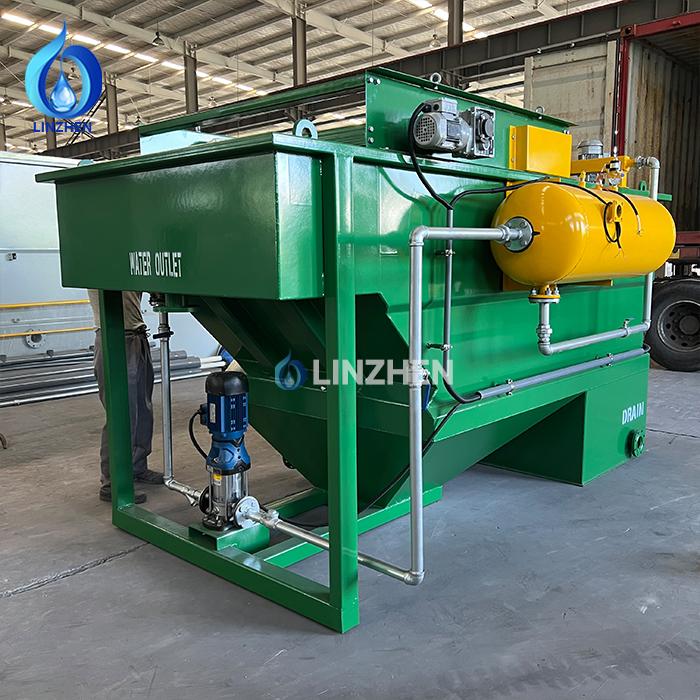
Depending on the wastewater characteristics, pretreatment may also include sedimentation, dissolved air flotation (DAF), or chemical treatment. During the design process, we fully consider how solid waste generated by each treatment stage will be collected, transported, washed, compacted, and disposed of.
View more of our wastewater treatment project cases.
Secondary Clarification and Solids Separation
The function of a secondary clarifier is to separate solids from the biological treatment process from the treated wastewater and return the settled sludge to the treatment process. Its treatment performance is affected by the surface overflow rate, solids loading rate, tank depth, influent distribution, sludge settling characteristics, return activated sludge (RAS) capacity, sludge withdrawal methods, and sludge extraction equipment.
Even if the biological reactor is properly designed, the entire wastewater treatment system may still fail to operate properly if the secondary clarifier cannot retain the sludge.
For MBR systems, membrane separation replaces the conventional secondary clarifier, but this introduces additional requirements, including effective screening, fouling control, scouring, and membrane cleaning.
Tertiary Treatment and Water Reuse
If the project requires higher effluent quality, the treatment process can be supplemented with ultrafiltration (UF), activated carbon, disinfection, advanced oxidation, reverse osmosis (RO), and other treatment processes.
The most appropriate technology should be selected according to the final water reuse or discharge quality requirements.
Coordination of Mechanical, Electrical, and Control Systems
A complete wastewater treatment plant requires mechanical and electrical systems to work together to ensure reliable operation.
Mechanical design includes: pumps, blowers, screens, mixers, sludge treatment equipment, chemical dosing systems, valves, process pipelines, and ventilation and odor control facilities.
Electrical design includes: load calculations, PLC control centers, grounding, lighting, uninterruptible power supplies (UPS), and power factor correction, while also providing online water quality monitoring and warning functions.
The design is not simply about setting all equipment to operate automatically. It should also clearly define the start-up and shutdown logic of the wastewater treatment plant, as well as the response procedures for equipment failures, abnormal liquid levels, and fluctuations in influent flow.
Linzhen provides the above complete solutions as part of municipal and industrial wastewater treatment engineering projects.
Linzhen's Experience in Wastewater Treatment Plant Solutions
We provide one-stop wastewater treatment solutions and have accumulated extensive practical project experience across different scales and regional markets.
Some of our projects include:
Integrated Wastewater Treatment Plant in the United States
Located in the United States, this wastewater treatment plant has a treatment capacity of 800 m³/day. In response to the large fluctuations in local wastewater quality and strict discharge standards, we adopted a multi-stage combined treatment process that integrates physicochemical pretreatment with biological treatment to achieve stable and efficient removal of organic matter, suspended solids, nitrogen, and phosphorus.
Plastic Washing Wastewater Treatment Plant in Malaysia
This wastewater treatment plant serves the local plastic recycling and washing industry in Malaysia, with a treatment capacity of 2,000 m³/day. It is specifically designed to address high concentrations of suspended solids, oils, and chemical additives in plastic washing wastewater. The entire wastewater treatment system is customized according to the characteristics of plastic cleaning wastewater, providing strong resistance to shock loads and low operating costs. It helps the customer achieve compliant discharge and water recycling and reuse, making it a representative benchmark wastewater treatment project for the plastic industry in the Southeast Asian market.
Municipal Wastewater Treatment Plant in Uzbekistan
This local municipal wastewater treatment plant has a treatment capacity of 10,000 m³/day. The project adopts a mature municipal biological wastewater treatment process, together with an automated control system and precise aeration management.
Greywater Treatment Plant in Saudi Arabia
Through efficient water purification and disinfection, the system provides advanced treatment and reuse of greywater from hotels, residential properties, and commercial facilities. In response to the water scarcity in the Middle East, as well as the relatively high salt content and water temperature of the raw water, we developed a targeted treatment process combination that balances operating energy optimization with treated water quality assurance. The treated water is used for landscape irrigation, toilet flushing, and landscape water replenishment.
River Water Treatment Plant in Indonesia
This river water treatment plant is located in Indonesia and has a treatment capacity of 600 m³/day. Using local surface river water as the raw water source, the plant applies a complete water treatment process including coagulation, sedimentation, filtration, and disinfection to remove turbidity, suspended solids, and microorganisms from the water. The treated water meets the standards for domestic and production water use.
Municipal Wastewater Treatment Plant in the Philippines
This municipal wastewater treatment plant provides centralized wastewater purification services for local towns and achieves stable and compliant wastewater treatment under limited land availability.
One-Stop Wastewater Treatment Solutions: Choosing the Right Partner
A qualified wastewater treatment plant must first ensure that the treated water consistently meets the required standards and complies with local environmental regulations, while protecting public health and the surrounding water resources and environment. More importantly, it must also protect the owner's investment by ensuring stable and reliable operation, convenient and hassle-free maintenance, and clear possibilities for future capacity expansion and system upgrades, so that the investment retains long-term value.
We customize the treatment process based on the raw wastewater quality and precisely design the treatment process according to key parameters such as COD, BOD, suspended solids (SS), ammonia nitrogen, and total phosphorus. We match suitable biological treatment, advanced treatment, and integrated wastewater treatment equipment. Whether it is municipal wastewater, industrial wastewater, or a decentralized water treatment project, we provide reliable technology and full-process service.
If you have a wastewater treatment project request, please fill out the form to contact us. Our technical team will reply to your email within 24 hours. Your email address and phone number will not be made public. Fields marked with * are required.
 EN
EN